
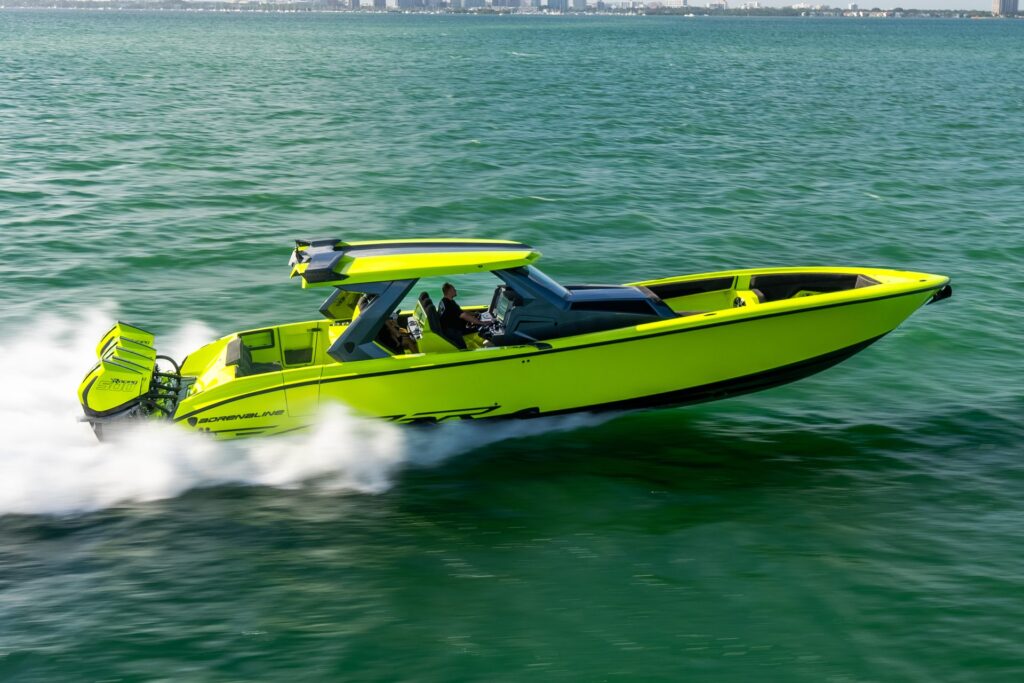
Offshore conditions are rarely perfect.
Wind shifts without warning. Swell builds unevenly. Boat traffic introduces unpredictable wake patterns. Visibility changes with weather and light. The open water is not a controlled environment, and that is precisely why it commands respect.
For inexperienced operators, changing conditions create anxiety.
For experienced ones, they create focus.
The difference is not bravado. It is familiarity built through repetition and discipline.
Understanding the Water Instead of Fighting It
Water is not an obstacle to overpower. It is a surface to interpret.
Every change in texture communicates something. A tightening ripple pattern may indicate rising wind. Cross-directional chop suggests intersecting traffic or shifting current. Long, rolling swell signals energy building at distance.
Experienced offshore operators do not charge blindly into these signals. They read them. They adjust speed. They refine line choice. They alter trim and throttle position before instability appears.
The goal is not domination.
It is alignment.
When alignment replaces aggression, conditions become manageable rather than intimidating.
Confidence Built Through Exposure
Confidence offshore is rarely formed in calm water alone. It develops through exposure to variation. Running in quartering seas. Managing beam chop. Navigating shifting crosswinds. Adjusting for unpredictable wakes.
Each outing builds pattern recognition. Over time, the operator develops an internal library of responses. The boat begins to feel predictable even when the environment does not.
This predictability reduces hesitation.
Hesitation at speed creates instability. Smooth decisions maintain control.
Why Composure Outperforms Force
When conditions deteriorate, the instinct for some is to push harder. To overpower instability with throttle or abrupt steering correction.
Experienced operators do the opposite.
They refine inputs. They stay light on the wheel. They make incremental corrections rather than dramatic ones. They maintain hull balance instead of forcing direction.
Composure allows the boat to do what it was engineered to do.
Force disrupts it.
The Discipline of Backing Off
One of the clearest signs of offshore maturity is restraint.
There are moments when conditions do not support triple-digit runs. Wind stacks steep chop. Traffic compresses lanes. Visibility drops. In these moments, discipline matters more than ego.
Backing off is not defeat.
It is judgment.
Experienced operators understand that long-term capability depends on intelligent decision-making, not constant maximum output.
Running hard when conditions allow and easing back when they do not is part of mastery.
Machines Built for Real Water
Serious offshore performance boats are not designed exclusively for flat conditions. Their hull designs account for unsettled water. Structural reinforcement supports load transitions. Propulsion systems are engineered for sustained output.
When properly built, these platforms do not rattle under stress. They settle. They track. They respond.
That response builds trust.
Trust removes intimidation.
The Mental Advantage
There is a psychological shift that occurs when an operator becomes comfortable in imperfect conditions.
Instead of scanning for threat, attention shifts toward optimization.
Instead of bracing for instability, the body settles into rhythm.
Instead of reacting late, corrections happen early.
This mental advantage changes everything. The same water that once felt chaotic now feels readable.
The environment has not softened.
The operator has sharpened.
Why Conditions Separate Operators
Flat water is forgiving. It hides inconsistency. It allows sloppy inputs to go unnoticed.
Unsettled water reveals everything.
Steering discipline. Throttle modulation. Trim awareness. Reaction timing.
Those who show up only for ideal days remain comfortable but limited.
Those who run when conditions vary expand capability.
Expansion builds confidence.
The Balance Between Aggression and Respect
Offshore performance appeals to those who enjoy speed, volume, and presence. But those traits must coexist with respect for the environment.
Aggression without awareness becomes recklessness.
Awareness without confidence becomes hesitation.
The balance lies in controlled assertion—running with authority while staying responsive to feedback.
Experienced operators do not fear conditions.
They respect them.
Why the Water Earns Respect
The ocean does not care about reputation. It does not adjust for ego. It responds only to physics.
That reality creates honesty.
If an operator lacks preparation, it becomes clear. If inputs are abrupt, the hull communicates it. If attention drifts, instability follows.
But when skill aligns with preparation, the water rewards it with smooth progress even in imperfect conditions.
Reward follows discipline.
Building Capability Over Time
Comfort in variable conditions is not achieved in a single season.
It is built outing after outing. Small lessons accumulate. Mistakes are corrected. Timing improves. Reading water becomes instinctive rather than analytical.
Eventually, what once felt intimidating feels familiar.
Not because it is easy.
But because it is understood.
The Satisfaction of Running Well
There is a unique satisfaction in maintaining composure through shifting water. In adjusting line cleanly through cross-chop. In accelerating through a break in traffic with controlled authority.
For those who appreciate loud engines and hard runs, this satisfaction runs deeper than simple speed.
It is not just about how fast you go.
It is about how well you manage the environment while doing it.
Conditions as a Training Ground
Variable offshore conditions serve as a training ground for judgment.
They refine patience.
They sharpen observation.
They reward smoothness.
Over time, the operator who embraces these lessons becomes more capable in every aspect of performance.
Capability reduces intimidation.
Experience replaces uncertainty.
Anticipation Over Reaction
A defining trait of experienced offshore operators is anticipation. Instead of waiting for instability to appear, they read subtle signals in advance. A slight shift in wind across the bow. A change in engine load as water texture thickens. A distant vessel altering course.
These signals are processed quickly and calmly.
Anticipation reduces the need for abrupt correction. It keeps the boat settled and the operator composed. When anticipation replaces reaction, confidence rises naturally.
Physical Rhythm in Imperfect Water
Running in variable conditions requires physical rhythm. Weight shifts subtly. Grip adjusts without tension. Posture absorbs impact rather than resisting it.
This physical engagement reinforces mental clarity. The operator feels changes through the hull before they become dramatic. That feedback loop strengthens instinct and reduces delay.
The boat and operator begin moving as a single unit rather than as separate elements reacting to one another.
Learning From Imperfect Days
Not every outing delivers ideal speed windows or smooth acceleration runs. Some days are defined by adjustment rather than maximum output.
Those days are not wasted.
They are formative.
They teach patience. They reinforce awareness. They highlight areas where technique can improve. They remind the operator that performance is not only about peak speed, but about sustained control.
Over time, these imperfect days become the foundation of mastery.
Confidence Without Arrogance
There is a subtle but important distinction between confidence and arrogance offshore.
Confidence is grounded in preparation and repetition.
Arrogance ignores changing variables.
Experienced operators carry confidence quietly. They do not broadcast comfort in rough conditions. They demonstrate it through smooth input, clean lines, and controlled acceleration.
Their authority is evident in how little excess movement they require.
Trust in the Platform
Comfort in conditions is not built on skill alone. It depends on the platform beneath the operator.
Hull integrity. Structural reinforcement. Predictable steering response. Balanced weight distribution. Reliable propulsion systems.
When the machine behaves consistently under load, the operator can focus on reading the environment rather than compensating for instability.
This partnership between operator and platform reduces intimidation significantly.
Why Experience Changes Perception
What feels chaotic to the untrained eye often feels structured to the experienced one.
Patterns appear in what once looked random. Rhythm emerges from what once felt disruptive. The water communicates clearly to those who have learned its language.
This shift in perception transforms offshore performance from intimidating to engaging.
The environment does not soften.
Understanding deepens.
Growth Through Exposure
Avoiding challenging conditions limits development.
Exposure builds resilience.
Resilience builds composure.
Composure builds authority.
That progression cannot be rushed. It is earned through time on the water, in both comfortable and demanding scenarios.
Operators who lean into exposure develop a steadiness that remains even when conditions deteriorate unexpectedly.
That steadiness defines offshore maturity.
Returning to the Water
Those who become comfortable in imperfect conditions rarely retreat permanently to ideal days only.
They understand that variability sharpens skill.
They respect the water without fearing it.
They prepare thoroughly and run deliberately.
And when they return to dock after navigating variable conditions with composure, the satisfaction runs deeper than speed alone could ever provide.
Because the true reward was not simply movement.
It was mastery under pressure.
Begin your private build consultation: https://lp.adrenalinepowerboats.com/reaper-quote
Explore Adrenaline Powerboats: https://adrenalinepowerboats.com/home/