
Modern life has become remarkably efficient at filling space. Cities grow denser, roads become busier, restaurants become harder to reserve, destinations become more crowded, and even places designed for escape often arrive with schedules, traffic, parking, and a surprising number of other people pursuing the same idea of relaxation. Convenience has increased, but true openness has become more difficult to find.
The water offers something fundamentally different.
Leave the marina and the visual boundaries begin to fall away. Buildings recede. Roads disappear. The horizon becomes larger. Routes are no longer defined by painted lanes and intersections, and the distance between one boat and another can expand until the surrounding environment feels almost private. The luxury is not that the rest of the world has ceased to exist. It is that, for a period of time, it stops occupying every inch of your attention.
For owners of performance powerboats, this sense of space adds another dimension to the experience. The machine provides the ability to move through a landscape that is defined less by infrastructure and more by water, weather, destination, and choice. Speed may shorten the distance between points, but the deeper appeal is the environment through which that distance is traveled.
Open water offers a kind of luxury that land increasingly struggles to provide: room.
Space Has Become More Valuable Because It Is Harder to Find
Traditional luxury has often been expressed through possession. Larger homes, private rooms, premium cabins, reserved tables, gated properties, and exclusive clubs all create separation from crowds by controlling access to a specific physical space.
Open water works differently. Its appeal comes from scale rather than enclosure.
A boat can leave a busy marina, pass through an active channel, and eventually enter an environment where the relationship between people and space changes dramatically. The same group that felt surrounded by activity at the dock may soon find itself framed by nothing more complicated than water and horizon.
That change can happen quickly, which is part of what makes boating so compelling. There is no need to build a wall around the experience. Distance creates the separation naturally.
This form of luxury is increasingly valuable because daily life rarely offers it. Phones compress distance. Cities compress people. Schedules compress time. Open water moves in the opposite direction. It restores a sense of scale.
The Horizon Changes Your Sense of Perspective
There is something psychologically different about looking toward a horizon that is not interrupted every few hundred feet.
On land, the eye is constantly given objects to process: signs, buildings, vehicles, sidewalks, fences, storefronts, traffic signals, and people. Even beautiful landscapes often arrive through roads, overlooks, trail systems, and other forms of infrastructure.
The water simplifies the visual field.
Sky and surface dominate. Distant shorelines become horizontal rather than vertical. The eye can travel much farther before reaching an obstruction. That physical openness can create a corresponding mental shift.
Conversation changes. Attention becomes less fragmented. A destination that seemed important while planning the day may begin to feel secondary once the boat is underway. The run itself becomes valuable because the environment gives everyone aboard a temporary distance from the visual and informational density of life ashore.
That is not isolation in the negative sense. It is perspective.
Luxury sometimes means adding more. On the water, it can mean finally having less to process.
Privacy on the Water Does Not Require Complete Isolation
Privacy is often interpreted too literally. It does not always mean being completely alone.
A waterfront restaurant may be busy. A marina may be active. A popular anchorage may contain other boats. Yet the water creates a kind of natural spacing that is difficult to reproduce on land. People occupy separate vessels, move along independent routes, and can change their surroundings simply by continuing farther.
This creates an unusual balance between connection and separation.
An owner can spend part of the day around other boaters, stop at a waterfront destination, meet friends, and enjoy the social side of boating without being committed to that environment for the entire day. When it is time to leave, the boat restores distance almost immediately.
The ability to choose when to participate and when to move away is a meaningful luxury.
It differs from the privacy created by staying behind a gate or within a private room. Boating keeps the world accessible without requiring the owner to remain immersed in it.
The Route Becomes Part of the Experience
Land travel is often judged by efficiency. The best route is usually the shortest one, the fastest one, or the one least likely to involve traffic. Navigation applications reduce uncertainty and encourage travelers to treat everything between departure and destination as time that should be minimized.
Boating can reverse that logic.
The trip itself often becomes one of the reasons to go.
A waterfront lunch is different when reaching it requires time on open water. Visiting friends by boat changes the emotional character of the journey. Moving between coastal destinations, marinas, islands, or waterfront properties creates a sense of progression that is difficult to reproduce through ordinary transportation.
The destination has not necessarily changed. The experience around it has.
A performance powerboat adds its own character to that journey because the operator remains involved. The route is not simply consumed from a passenger seat. Conditions are observed, navigation matters, the movement of the boat changes with the water, and the helm creates a direct relationship between the person driving and the environment ahead.
Performance, in this context, does not need to dominate the story. Its value is that it makes distance more accessible while preserving the pleasure of traveling through it.
Distance Can Change the Rhythm of a Day
Many luxury experiences are tightly organized. Reservations have times. Flights have departures. Events have schedules. Drivers have pickup windows. Even leisure can become another form of logistics.
A day on the water can still require planning, particularly around weather, fuel, navigation, daylight, and destination availability. Responsible boating is never entirely spontaneous. Yet once underway, the rhythm can feel substantially different.
Time is measured less by appointments and more by distance, conditions, and where the day feels like going next.
A planned lunch can become a longer afternoon. A quick run can turn into several hours on the water because conditions are good and no one is eager to return. A destination can be changed because another idea becomes more appealing.
That flexibility is part of the luxury.
The boat creates options without requiring that every option be exercised. The day can have structure without becoming rigid.
Open Water Makes Familiar Places Feel Different
One of boating’s great pleasures is that it can make familiar geography feel new.
A coastal town approached by road is experienced through intersections, buildings, parking, and sidewalks. The same destination approached from offshore reveals a completely different composition. Shorelines replace streets. Architecture is understood in relation to water. Harbors become gateways. Bridges become landmarks rather than traffic obstacles.
The perspective changes because the approach changes.
This is particularly evident in waterfront communities, where the relationship between land and water is central to the identity of the place. Arriving by boat allows that relationship to be experienced directly.
Even a familiar destination can feel more removed from routine when the journey begins at a dock instead of in a driveway.
That ability to make known places feel unfamiliar is another form of luxury. It expands the experience without necessarily requiring a more distant destination.
Space Changes the Social Experience
Boating also creates a distinctive environment for spending time with other people.
A performance powerboat can be an engaging machine, but much of ownership happens between moments of acceleration. There are conversations at cruising speed, time spent at anchor or at the dock, meals along the waterfront, and long stretches when the people aboard are simply sharing the same environment.
The openness around the boat changes the character of those interactions.
There are fewer external interruptions. People are not constantly moving between rooms, vehicles, restaurants, and other spaces. The group shares the journey as well as the destination. The experience develops continuity.
This is one reason an afternoon on the water can feel disproportionately substantial compared with the number of hours involved. The same people may spend an equivalent amount of time together on land, yet that time is often divided among multiple activities and distractions.
On the boat, the day has a clearer setting.
The water provides the space around the experience, and the boat becomes the place from which that space is shared.
Freedom on the Water Still Requires Judgment
The openness of the water should never be confused with an absence of responsibility.
Navigation rules remain important. Weather deserves respect. Other vessels have to be considered. Speed must be appropriate to conditions and location. Marinas, channels, shorelines, and environmentally sensitive areas impose legitimate constraints.
In fact, the value of open-water freedom becomes clearer when it is approached with good judgment.
Freedom is not the ability to ignore the environment. It is the ability to move confidently within it.
Experienced boaters understand that some days invite a longer run while others suggest staying closer to home. Conditions may alter a destination. Traffic may affect a route. Good ownership includes knowing when the water offers space and when it demands greater caution.
That discipline does not diminish the luxury of boating. It makes the experience sustainable.
The Boat Becomes a Doorway Rather Than the Destination
It is easy to focus on the boat itself. A serious performance machine offers plenty to appreciate: design, craftsmanship, customization, engineering, controls, materials, and the simple satisfaction of owning something mechanically compelling.
But one of the most important things a boat provides is access to experiences beyond the object.
It changes where a weekend can happen. It changes how a destination can be reached. It can turn a waterfront location from something viewed across the water into somewhere directly accessible from it. It creates a reason to watch weather differently, explore shorelines more closely, and think about geography in terms of routes that do not exist on a road map.
The boat matters because of what it enables.
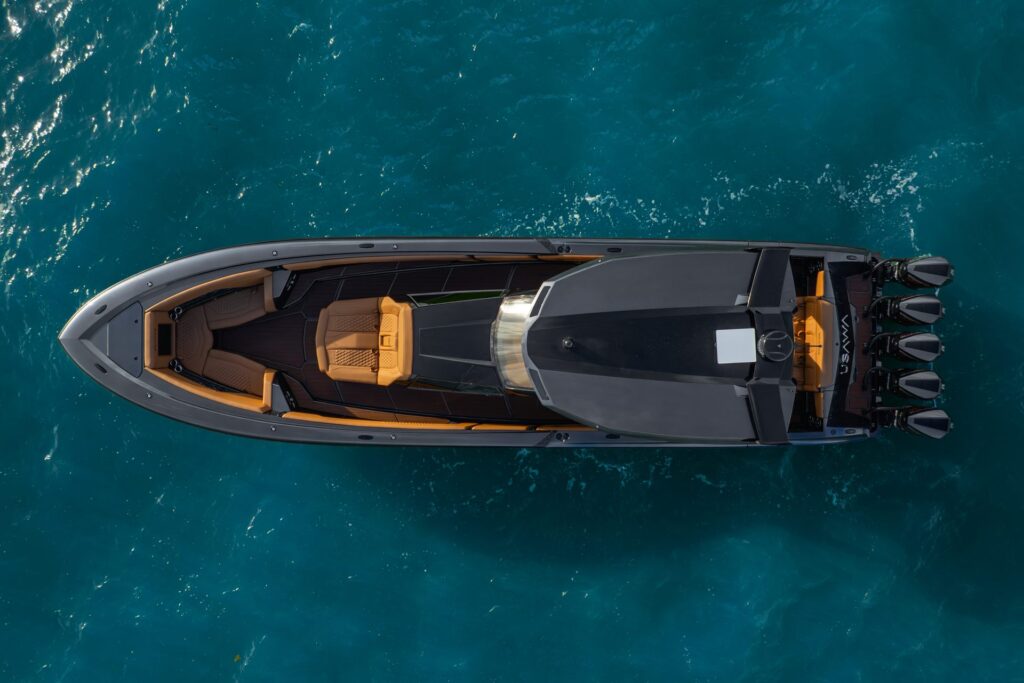
This is where a performance powerboat such as a Reaper from Adrenaline Powerboats can occupy a broader role in an owner’s life. The appeal is not limited to the moments when performance is being actively explored. A capable, individually specified boat can also become the machine around which days on the water are organized.
The ownership experience expands from driving the boat to deciding where the boat can take you.
The Greatest Luxury May Be the Space Between Things
Much of modern luxury is designed to attract attention. Open water does the opposite. It allows attention to expand.
The space between the boat and shore grows. The distance between one obligation and the next feels less immediate. A horizon replaces the dense visual field of daily life. Conversations have room to develop. The journey no longer feels like an inconvenience separating two destinations.
This is why the luxury of open water is difficult to reproduce on land.
It is not simply privacy, because privacy can be created behind walls. It is not simply freedom, because every form of travel has boundaries. It is not simply scenery, because beautiful views exist almost everywhere.
It is the combination of distance, perspective, movement, choice, and physical openness.
For a few hours, the world feels larger.
That may be one of the most valuable things a performance powerboat can offer. The machine provides the means to cross the water, but the water provides the space that makes the journey matter.
For owners interested in building a Reaper around the way they want to spend that time, explore a custom Reaper inquiry.