
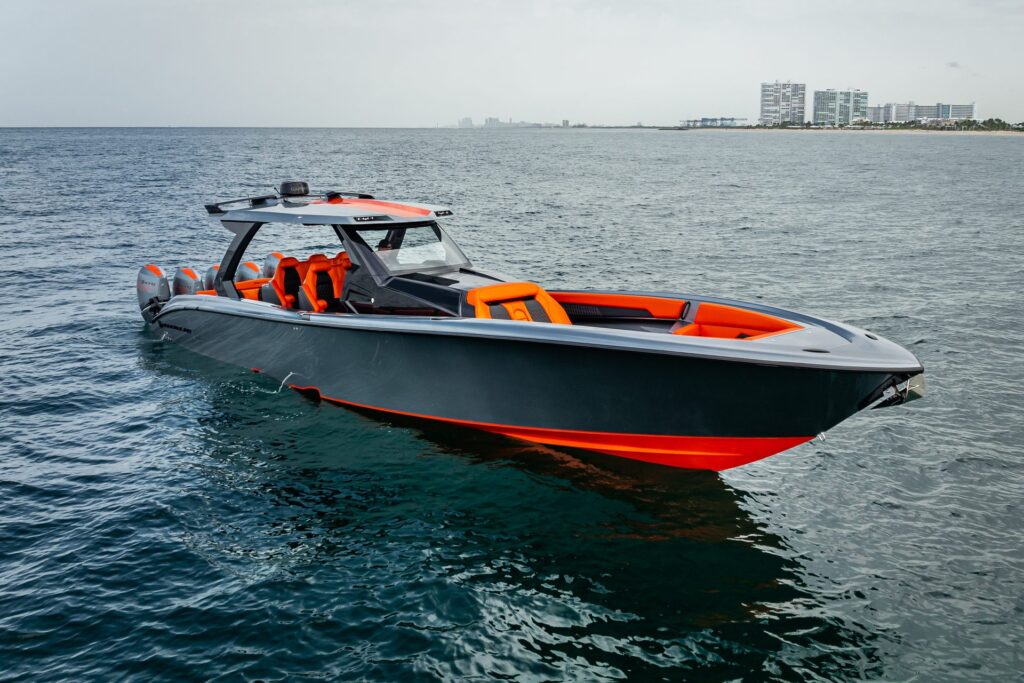
A performance powerboat can be recognized by model, but remembered by specification. Two boats may share the same hull, the same underlying architecture, and the same performance intent, yet one can remain vivid in memory because of the way color, materials, equipment, and visual details were brought together. That difference is the one-off effect.
Individual specification does not require a boat to become unrecognizable. In fact, the most memorable examples often preserve the identity of the model while giving one particular build a character that is difficult to confuse with another. A distinctive paint treatment, a disciplined cockpit palette, a specific engine finish, or a carefully resolved combination of details can turn a familiar platform into a machine with its own visual signature.
That is what makes individual specification more than decoration. It changes how the boat is remembered.
Memory Begins With a Strong Visual Cue
People rarely remember every technical detail of a machine they encounter. They remember a few dominant cues.
A particular color. A graphic. A silhouette. A striking interior treatment. A contrast between dark surfaces and metallic hardware. A finish that looked different under changing light. These impressions become shorthand for the entire object.
This is especially true with boats because the scale of the surfaces gives visual decisions unusual power. A custom automotive color might occupy a few square meters. On a performance powerboat, the same kind of decision stretches across a much larger form and interacts with water, sky, sunlight, and distance.
The strongest specifications use that scale intelligently. Rather than treating the hull as empty space waiting to be filled, they allow one or two visual ideas to define the boat clearly enough that the viewer can recall it later without needing the model name.
Recognition Is Different From Novelty
Novelty can attract attention quickly. Recognition is harder to earn.
A wildly unusual color or complicated graphic may create an immediate reaction, but that does not guarantee the boat will remain memorable in a meaningful way. Recognition depends on coherence. The viewer needs to be able to connect the visual treatment with the underlying machine.
That is why the best individual specifications do not simply chase difference. They build identity.
The boat can still look unmistakably like the platform it came from, but the individual example develops its own presence. The hull shape remains legible. The cockpit still belongs visually to the exterior. The paint supports the geometry rather than hiding it.
Difference gets noticed. Identity gets remembered.
Paint Can Give One Build a Signature
Exterior paint is often the most immediate tool for creating a one-off identity.
Adrenaline Powerboats states that it uses custom paint on every boat and that its design team works closely with customers to tailor the process to their specifications. The company also says this approach allows its builds to remain unique and different. That philosophy is particularly relevant to the one-off effect because paint is one of the few specification decisions visible before the observer knows anything else about the boat.
Color can make a build feel technical, restrained, dramatic, architectural, or intentionally unconventional. Graphics can reinforce length, follow the hull’s geometry, or create a visual break that makes one example immediately recognizable from a distance.
The important point is not complexity. A simple scheme can become more memorable than an elaborate one if it feels inseparable from the shape beneath it.
Material Choices Continue the Identity Up Close
Paint defines the boat from a distance. Materials determine whether that identity survives closer inspection.
Once aboard, the owner and passengers experience upholstery, hardware, flooring, carbon-fiber elements, painted components, and other finishes at a much more intimate scale. If these details feel disconnected from the exterior, the specification can lose some of its coherence.
A well-resolved build continues the same point of view inward.
That does not require literal matching. A bold exterior may benefit from a quieter cockpit. A restrained hull can support more texture inside. The goal is continuity rather than repetition.
Adrenaline’s current Reaper 47 specification, for example, lists visual carbon legs and windshield frame among the available options, along with custom-painted engines and hull-paint upgrades. Those choices can materially change how one particular boat is perceived without changing the identity of the Reaper platform itself.
Engine Presentation Can Become Part of the Composition
On an outboard performance boat, the engines are visually significant. They occupy a large area at the stern and remain visible from both the dock and the water.
That makes engine treatment part of the design rather than a separate mechanical concern.
A custom-painted engine package can continue the hull color, create deliberate contrast, or become the visual anchor of the stern. The effect can be subtle or dramatic, but the most successful approach treats propulsion as part of the complete composition.
Adrenaline currently lists custom-painted engine options on the Reaper 42 and Reaper 47. Combined with custom hull paint, this gives individual builds additional room to establish a specific identity through the relationship between hull and propulsion.
Again, the objective is not to make every visible component unusual. It is to make the parts feel related.
Individual Specification Can Create Instant Recall
The strongest custom boats often become easy to describe.
People may not remember the full equipment list, but they remember “the dark one with the restrained metallic graphics,” “the white-and-black build,” or another visual combination that immediately identifies one example.
That kind of recall matters in enthusiast culture because recognition becomes attached to the individual machine rather than only to the badge.
The same phenomenon exists in collector cars. Enthusiasts remember certain examples because of an unusual factory color, a rare interior combination, a distinctive wheel specification, or a particular competition history. The model provides the foundation, but the individual car becomes the object of memory.
A custom performance boat can develop the same effect on a much larger visual scale.
One-Off Does Not Mean Random
There is a risk in treating individuality as a mandate to make every detail different.
A boat can be highly customized and still feel generic if the decisions do not form a coherent whole. Conversely, a relatively restrained build can feel truly singular when each choice reinforces the others.
One-off identity therefore depends less on quantity than judgment.
A unique paint treatment should relate to the hull. Upholstery should make sense with the exterior. Technology should not interrupt the visual language of the helm. Hardware finishes should support the broader material strategy. If engine paint is used, it should feel connected to the rest of the boat rather than added as an afterthought.
The more disciplined the specification, the easier it becomes for observers to remember the complete machine instead of a collection of disconnected features.
Build-Specific Rigging Adds Another Layer of Individuality
Not every one-off decision is visual.
Adrenaline says each boat is rigged in-house and that rigging is specified for each build. That means individualization can extend beyond paint and visible materials into the way equipment is configured for a particular owner.
This kind of variation may not be obvious from the dock, but it can contribute to the owner’s perception that the boat is genuinely specific rather than cosmetically differentiated.
The distinction matters because memorable ownership is not created through appearance alone. A one-off boat should ideally feel specific in use as well as in photographs.
The visual identity creates recognition for others. The functional specification deepens recognition for the owner.
The Model Should Still Be Visible Beneath the Specification
One of the strongest tests of a custom build is whether the original design remains legible.
A memorable specification should not need to erase the platform in order to establish individuality. The hull, proportions, cockpit architecture, and overall stance should still communicate what the boat is.
This balance matters because the model provides the design credibility on which the custom work depends.
Adrenaline’s current site presents the Reaper 42 and Reaper 47 as distinct performance center-console platforms, while its company materials emphasize custom paint and build-specific rigging. That creates a useful tension: each build can be highly individualized while remaining recognizably part of the Reaper family.
The result is stronger than anonymity. The observer can identify both the model and the particular example.
Familiarity Makes the One-Off Effect Stronger
Individual specification often becomes more meaningful after repeated exposure.
A dramatic new build may attract attention immediately, but the more interesting question is whether the boat remains recognizable after the novelty has passed. Strong specifications tend to do exactly that because their identity is built from relationships rather than surprise alone.
The owner begins to associate the boat with one specific combination of colors, materials, and details. Friends recognize it approaching. Photographs become easy to identify without captions. The boat develops a visual continuity across different destinations and seasons.
Over time, those decisions stop feeling like options.
They become the boat.
That transformation is one of the reasons a highly individual machine can become difficult to replace. Another boat may offer newer technology or different performance, but it will not automatically reproduce the identity that accumulated around one particular specification.
Memory Is Built Through Repetition
A one-off build becomes memorable not because it is seen once, but because it is seen repeatedly in different contexts.
The same paint appears under morning light, midday sun, overcast skies, and marina lighting. The same cockpit hosts different groups of people. The same hull is seen tied to familiar docks and moving through open water. The specification becomes the visual thread connecting those experiences.
This repetition gives design emotional weight.
A distinctive machine becomes easier to remember because the owner and everyone around it encounter the same identity again and again. What began as a set of design decisions becomes part of the history of the boat.
That is where individual specification moves beyond aesthetics.
It gives memory a physical form.
The One-Off Effect Is the Difference Between a Model and an Example
Collectors often distinguish between the importance of a model and the appeal of a particular example.
The model establishes the architecture, engineering, and design language. The example tells a more specific story through color, configuration, condition, equipment, and history.
Performance boats deserve the same distinction.
A Reaper 42 is a model. A particular Reaper 42 with a specific paint treatment, engine finish, cockpit palette, rigging configuration, and years of accumulated use becomes an individual object.
That difference is what the one-off effect captures.
It is not about making the boat impossible to recognize. It is about making one example impossible to confuse with another.
For Adrenaline Powerboats, custom paint on every boat, individually specified rigging, and available visual options across the Reaper range provide the framework for that kind of identity. The strongest outcome is not simply a boat that looks custom on delivery day. It is a machine whose specification becomes so closely associated with the boat that the two eventually feel inseparable.
That is how an individual build becomes memorable.
For owners who want to create a Reaper with a visual and functional identity distinctly its own, explore a custom Reaper inquiry.