
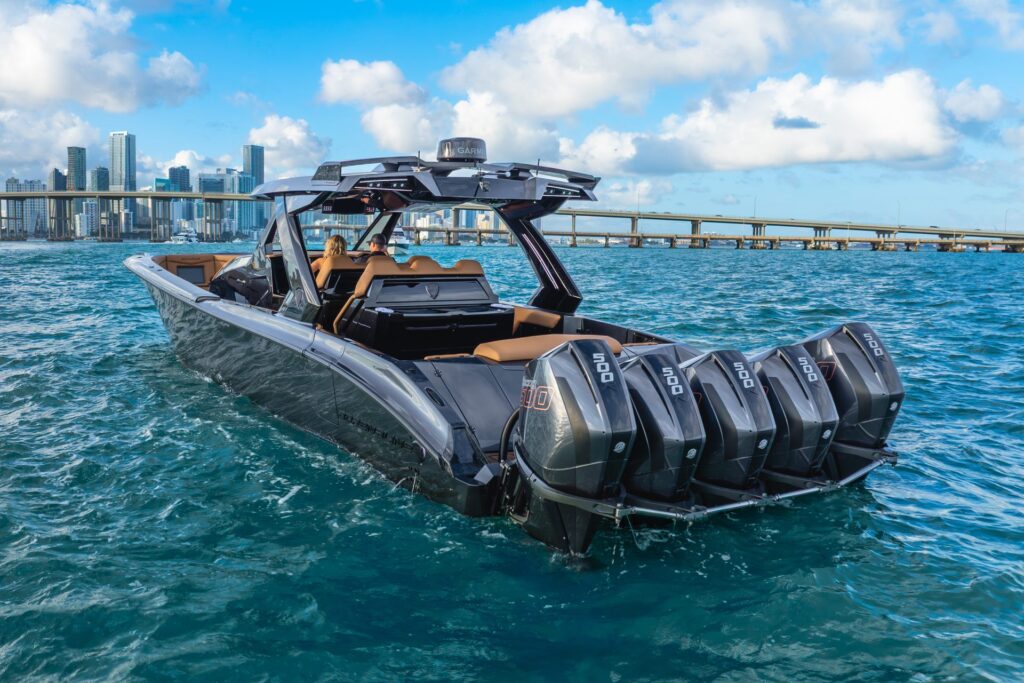
A serious performance boat should be able to deliver excitement in minutes and satisfaction over an entire day. Those are not the same achievement. A short run can make almost any fast machine feel dramatic. Sustained enjoyment asks more of the design.
Hours on the water expose everything the first acceleration can hide. Seating either continues to support the body or begins to fatigue it. The helm either becomes intuitive or increasingly demanding. Storage either keeps the cockpit organized or allows equipment to take over. Materials either remain comfortable in sun, spray, and heat or reveal that they were selected primarily for appearance.
That is why a great performance boat should be judged not only by how intensely it performs, but by how well it supports the hours surrounding those moments. Performance creates the high points. Thoughtful design determines whether the entire day is worth repeating.
The First Ten Minutes and the Next Six Hours Ask Different Questions
The opening minutes of a run are dominated by sensation. Acceleration, engine sound, movement, and the changing horizon command attention. The boat feels alive, and the driver is still absorbing the experience.
Later, the evaluation becomes more demanding.
After several hours, small compromises grow larger. A seat that seemed supportive during a demonstration may begin to create pressure points. A control that required a slightly awkward reach becomes irritating after repeated use. Poorly placed gear starts interfering with movement. Glare becomes tiring. A cockpit that looked dramatic at the dock may feel visually busy when the driver has been processing information all afternoon.
This is where the distinction between a short thrill and a great boat becomes clear. The best machines preserve intensity without making the owner pay for it with unnecessary fatigue.
Seating Has to Work After the Excitement Settles
Performance seating has two responsibilities. It has to support occupants when the boat is moving with purpose, and it has to remain comfortable when the day stretches longer than expected.
Those requirements are related but not identical.
A seat can hold the body securely and still become uncomfortable after hours. Conversely, a soft lounge-oriented seat may feel pleasant at the dock but provide insufficient support once conditions become more active. The strongest solution balances geometry, bolstering, material quality, and the ability to change posture naturally.
Adrenaline Powerboats lists dual-row helm seating for six, full wraparound coaming bolsters, and heavy-duty marine-grade UV-stable upholstery on both the Reaper 42 and Reaper 47. Those details matter in a long-day context because they address support, passenger capacity, and materials that are expected to live in an exposed marine environment.
Comfort in a performance boat should not feel like an apology for capability. It should make capability easier to enjoy for longer.
The Helm Should Become Easier With Time, Not Harder
A strong performance helm reveals its quality gradually.
During the first outing, large displays and sophisticated controls can create an immediate impression. After several hours, the more important question is whether the information architecture makes sense. Can the driver find what matters quickly? Are frequently used controls where the hand expects them? Does the seating position support clear visibility? Can attention stay on the water instead of repeatedly returning to the interface?
Modern electronics should reduce mental effort rather than create another source of it.
The Reaper 42 currently lists dual 19-inch Garmin helm screens, a single 27-inch Garmin helm screen, digital switching, digital shift and throttle control, and autopilot among its published equipment. The value of such technology is greatest when it supports a clean operating rhythm over many hours instead of functioning mainly as visual theater.
A long day exposes whether the helm was designed around use or around presentation.
Storage Protects the Experience
Storage is one of the least glamorous features to discuss and one of the easiest to appreciate after several hours aboard.
Real days on the water generate equipment. Towels, bags, shoes, lines, fenders, food, safety gear, personal items, cleaning supplies, and other necessities all need a place. Without useful storage, these objects migrate into seats, walkways, and open surfaces.
That changes more than appearance. Clutter affects movement, comfort, and the sense of order that makes a premium cockpit enjoyable.
Both the Reaper 42 and Reaper 47 currently list seven below-deck storage compartments and storage beneath the front helm seats. This is the kind of equipment that rarely creates the strongest first impression but can strongly influence whether a boat remains pleasant throughout a full day.
The luxury is not having to reorganize the cockpit every time someone reaches for something.
A Great Boat Has More Than One Operating Mood
A full day on the water is rarely experienced at one intensity.
There may be an early departure through a marina, an open-water run, a slower cruise while people talk, a waterfront stop, another stretch at speed, and a careful final approach at the end of the day. A boat that is satisfying only during the fastest portion of that sequence leaves much of ownership unresolved.
The strongest performance boats change character naturally.
At speed, the cockpit should feel focused and supportive. When the pace drops, the same boat should allow conversation, movement, and relaxation without feeling like everyone is still strapped into a single-purpose machine. At the dock, access, storage, seating, and practical conveniences become more important than outright performance.
The Reaper 42 and 47 specifications include forward lounge entertainment areas, dual side-door entry, refrigerated cool boxes, freshwater systems, and cabin air conditioning alongside their performance-oriented helm and propulsion equipment. The broader point is that high performance and full-day usability do not need to occupy separate boats.
Materials Have to Survive the Actual Day
Luxury materials are easy to evaluate in controlled conditions. Real use is more demanding.
Marine surfaces deal with ultraviolet exposure, heat, water, sunscreen, wet clothing, repeated cleaning, and constant physical contact. A material can look exceptional under showroom lighting and still become irritating if it is too hot, delicate, slippery, or difficult to maintain.
Long-day design therefore requires a different definition of premium.
The best material is not automatically the most visually dramatic or expensive one. It is the material that still looks and feels appropriate after repeated exposure to the environment in which the boat actually operates.
Adrenaline’s published use of marine-grade UV-stable upholstery on the Reaper models is relevant for exactly this reason. The material choice is tied to the realities of boating rather than separated from them.
Refinement is more convincing when it survives contact with the day.
Practical Conveniences Become More Valuable Hour by Hour
Small conveniences have an unusual characteristic: their value compounds.
A refrigerated compartment may seem secondary beside propulsion or electronics, but it becomes more useful every time someone reaches for a drink without reorganizing the cockpit. A freshwater washdown, side door, trash receptacle, or practical access point may not create a dramatic marketing image, yet repeated use can make these details central to how easy the boat feels to live with.
This is why long-day design depends on dozens of small decisions rather than one spectacular feature.
Adrenaline lists dual side-door entry, tip-out trash cans, freshwater systems, and a refrigerated cool box among the current Reaper 42 and Reaper 47 equipment. None defines the boat alone. Together, they support the hours when the owner is not chasing the most intense part of the performance envelope.
The strongest practical features eventually disappear into routine. That invisibility is often evidence that they were designed well.
Fatigue Is the Enemy of Enjoyment
A great performance boat should leave the owner wanting another run, not recovering from the previous one.
Fatigue can come from obvious sources such as physical movement, heat, or long hours. It can also come from smaller forms of friction: poor sightlines, constant reaching, disorganized information, uncomfortable posture, excess noise, clutter, or a cockpit that requires too much conscious management.
Individually, these problems may seem minor. Across an entire day, they accumulate.
Thoughtful design works in the opposite direction. Supportive seating reduces physical strain. Clear displays reduce mental strain. Useful storage reduces clutter. Practical access reduces interruption. Appropriate materials reduce discomfort.
Luxury in a performance environment is partly the management of fatigue.
The goal is not to eliminate the sensation of speed or isolate the occupants from the water. It is to preserve the sensations that make the boat exciting while reducing the unnecessary effort that makes those sensations harder to enjoy over time.
A Long Day Reveals Whether Performance and Luxury Were Truly Integrated
It is easy to make performance and luxury coexist in a brochure. A boat can have powerful engines and premium upholstery. It can have advanced displays and custom paint. Those combinations are visible immediately.
Integration is harder.
The real test is whether the luxury features support the performance experience and whether the performance architecture leaves room for the boat to function comfortably when the pace changes.
Adrenaline describes its broader build process as design to delivery under one roof, with in-house 3D design, CNC capability, custom paint, and build-specific rigging. That integrated approach is relevant because full-day usability is rarely created by one department or one feature. It depends on many systems and details working together.
A great boat should feel coherent whether the owner is accelerating onto open water, cruising with passengers, stopping for lunch, or easing back into the marina hours later.
The Best Performance Boat Makes You Want to Stay Out
The most revealing moment in a full day aboard may come when there is no practical reason to remain on the water.
The destination has been reached. The run has already delivered the excitement everyone wanted. There is enough daylight to return. Nothing is missing from the day.
Yet nobody is ready to go back.
That response says something important about the boat. It means the experience has expanded beyond acceleration. The seating still feels good. The cockpit still works. People are comfortable. Gear is under control. The helm remains satisfying. The machine has become a place worth spending time rather than merely a vehicle for producing brief bursts of intensity.
That is what separates a great performance boat from a short thrill.
Performance should make the day memorable. Design should make the day sustainable.
When those qualities are integrated properly, the owner does not have to choose between a serious driving experience and a boat capable of carrying the rest of the day with equal confidence. The same machine can provide both.
For owners interested in shaping a Reaper around the complete day rather than only the fastest minutes of it, explore a custom Reaper inquiry.