There was a time when luxury was often defined by distance from the machinery. The ideal experience placed the owner in the rear seat, the private cabin, or the most insulated part of the environment while someone else handled the technical work. Comfort increased as involvement decreased, and sophistication was measured partly by how little the owner had to do.
That idea has not disappeared, but it no longer owns the definition of luxury. Across performance automobiles, motorcycles, private aviation, and serious powerboats, another model has become increasingly compelling: the owner who wants to operate the machine personally. The attraction is not inconvenience for its own sake. It is access to an experience that becomes richer when skill, attention, and mechanical understanding are part of it.
A performance powerboat fits naturally into this owner-driver renaissance because the helm is not merely a control station. It is where design, engineering, water, sound, acceleration, and judgment come together. For owners who value participation, being behind the wheel is not a task to delegate. It is one of the principal reasons the boat matters.
Luxury No Longer Has to Mean Separation
Luxury has traditionally been associated with the removal of effort. Chauffeurs, crew, attendants, concierge services, and automation all exist partly to take friction out of an experience. In many situations, that remains exactly what luxury should do.
Performance machines introduce a different form of value.
The enthusiast may not want the steering, throttle, navigation, or mechanical feedback removed from the experience. Those are not inconveniences. They are the point of contact between owner and machine. The pleasure comes from understanding what the machine is doing and having enough control to influence it directly.
This is why a beautifully engineered driver’s car can remain compelling even when a more comfortable automobile is available. It is why some aircraft owners prefer to fly themselves. It is why motorcycles continue to attract people who could choose far more isolated transportation.
The same logic applies on the water. A performance boat can be luxurious while still asking the owner to participate.
Participation Creates a Different Kind of Value
Passive luxury is built around receiving. Active luxury is built around doing.
The distinction changes the emotional relationship with the object. A passenger appreciates comfort, scenery, and service. An owner-driver also experiences timing, response, line choice, control weight, visibility, surface conditions, and the consequences of input.
That additional layer creates depth.
The machine is no longer simply impressive because of what it can do. It becomes interesting because the owner can learn how to use it more fluently. Familiarity grows through repetition. Controls become instinctive. The operator begins to understand how conditions affect the boat and how the boat communicates what is happening beneath it.
This kind of value cannot be delivered fully through a specification sheet. It only appears through participation.
The Best Performance Machines Reward Attention
Enthusiasts tend to become attached to machines that reveal more as they are used.
A car with communicative steering may become more satisfying after thousands of miles because the driver understands its responses more precisely. A motorcycle can develop a similar relationship through throttle, braking, balance, and body position. In aviation, a pilot gains confidence by understanding systems, procedures, and the aircraft’s behavior across changing conditions.
A performance powerboat rewards attention in its own way.
The water is constantly changing. Wind, load, traffic, and surface conditions alter the operating environment. The boat asks the driver to observe rather than simply point toward a destination. That variability means the same route can feel different from one outing to the next.
For the owner-driver, this is not an obstacle to luxury. It is part of the richness of the experience.
Hands-On Does Not Mean Primitive
The return of owner-operated performance should not be mistaken for nostalgia for crude machinery.
Modern enthusiasts often want precisely the opposite. They appreciate sophisticated technology, advanced controls, digital information, ergonomic seating, and systems that reduce unnecessary workload. The objective is not to make operation harder. It is to preserve the parts of operation that are meaningful.
A good performance cockpit can therefore be both advanced and involving. Technology can provide navigation, engine information, switching, communications, and assistance while still leaving the operator firmly connected to the boat.
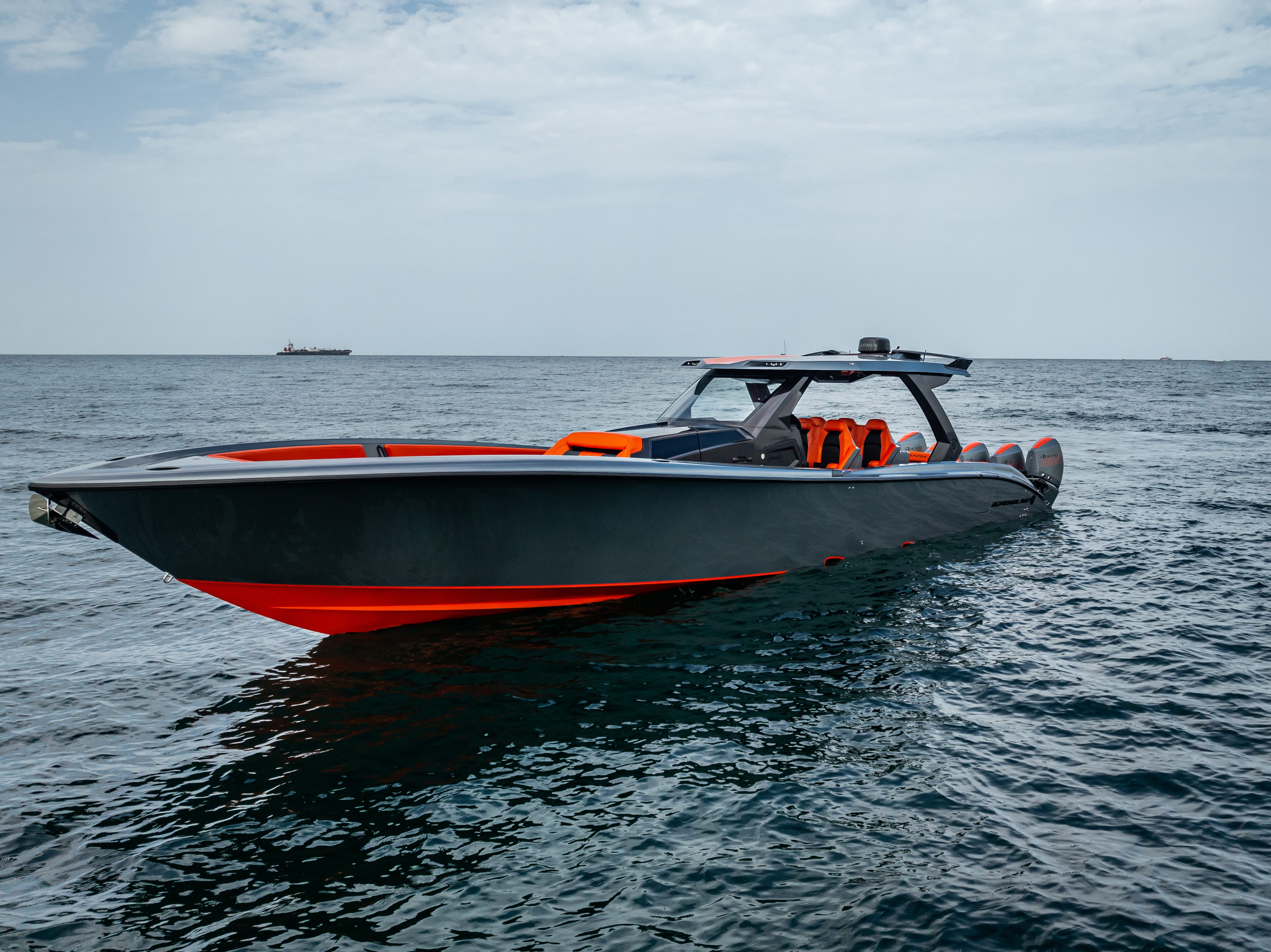
The current Reaper 42 from Adrenaline Powerboats reflects that balance through digital shift and throttle control, autopilot, integrated bow and stern thrusters, and a helm built around multiple Garmin displays. Its published cockpit specification also includes dual-row helm seating for six.
The Reaper 47 follows the same broader philosophy, pairing a performance-oriented platform with dual-row helm seating and modern equipment intended to support serious time aboard.
These are examples of technology supporting the driver rather than eliminating the driver.
The Helm Becomes the Best Seat on the Boat
In many luxury environments, the most desirable place is the one farthest from the work. On a serious performance boat, the opposite may be true.
The helm can become the best seat because it offers the highest concentration of experience. The driver sees the water first, feels the boat respond through steering and throttle, manages the route, and remains directly connected to the machine’s movement.
That position also changes how the rest of the boat is understood. Seating, visibility, controls, displays, and cockpit geometry are no longer secondary details. They determine how effectively the owner can remain engaged over hours rather than minutes.
For someone who genuinely enjoys operating machinery, this is an important luxury distinction. The premium experience is not being removed from the controls. It is having controls worth using.
Owner-Drivers Build Familiarity That Passengers Cannot
Repeated operation creates a kind of knowledge that is difficult to acquire from the passenger seat.
The owner begins to recognize how the boat feels at different speeds and loads. He understands which control inputs produce the cleanest response. He becomes familiar with the view over the bow, the timing of maneuvers, and the way changing water alters the character of the run.
This familiarity makes ownership more personal.
The boat becomes less abstract because the owner knows it through physical interaction. It is no longer simply a design admired at the marina or a set of numbers discussed among enthusiasts. It becomes a machine with habits, responses, and a recognizable operating character.
That relationship is one of the reasons owner-driven performance machines can be difficult to replace. The owner is attached not only to the object but also to the fluency developed with it.
Private Aviation Shows the Same Instinct
Private aviation provides one of the clearest parallels.
Some owners value aircraft primarily for speed, privacy, and the ability to move efficiently between destinations while professional pilots handle operations. Others are drawn deeply enough into aviation that flying becomes part of the attraction.
Those owner-pilots are not rejecting luxury. They are defining it differently.
Their access to the machine includes the cockpit. They want to understand systems, manage procedures, make decisions, and participate in the journey directly. The reward is not simply arriving somewhere. It is the intellectual and physical satisfaction of operating a sophisticated machine well.
Performance boating speaks to the same mindset. The owner-driver may still appreciate comfort, premium materials, and social space, but none of those replaces the attraction of the helm.
Automotive Culture Has Already Moved This Way
The modern collector-car market demonstrates how strongly involvement can coexist with luxury.
Some of the most desirable performance cars are valued precisely because they preserve direct driver interaction. Steering feel, pedal response, seating position, sound, shifting, and chassis behavior remain central topics among enthusiasts even as automation becomes more capable.
The interesting point is that convenience and desirability do not always rise together.
A system can be objectively easier to use and still be less engaging. A newer machine can perform more tasks automatically while leaving the driver with less to discover. For some owners, that tradeoff is worthwhile. For others, it weakens the experience.
A performance powerboat offers another answer. Modern systems can reduce unnecessary complexity while the owner remains actively responsible for the part that matters most: driving.
Being Hands-On Deepens the Ownership Story
A machine operated personally accumulates a different kind of history.
The owner remembers more than destinations. He remembers conditions, decisions, moments at the helm, difficult approaches handled well, early mornings when the water was unusually clean, and long runs when the boat seemed perfectly matched to the day.
Those experiences become part of the machine’s meaning.
The same is true with collector cars and aircraft. The stories that matter are often not about possession but use: the road driven, the track day, the flight completed, the trip made, the weather encountered.
A performance boat creates the same opportunity because operation gives the owner a central role in the memory.
The boat is not merely present in the story. The owner is doing something with it.
Technology Should Increase Confidence, Not Distance
The future of owner-driven luxury will not depend on removing technology. It will depend on integrating technology in a way that increases confidence without creating emotional distance.
Navigation systems can make routes clearer. Digital controls can make inputs more precise. Thrusters can assist low-speed handling. Better displays can organize complex information more effectively. None of these systems has to diminish engagement if they are designed around the operator.
The Reaper 42, for example, currently lists multiple Garmin helm displays, digital switching, digital shift and throttle control, autopilot, and joystick-controlled bow and stern thrusters. The Reaper 47 similarly combines a performance-focused cockpit with modern controls and substantial helm seating.
The useful question is not how much technology is present. It is whether that technology helps the owner stay focused on operating the boat.
This is where modern luxury becomes more mature. Assistance does not need to become detachment.
The Social Experience Changes When the Owner Is Driving
Owner-driven performance also changes the dynamic aboard.
The driver is not separated from the rest of the group by professional role or hierarchy. The same person who chose the destination, specified the boat, and invited the guests may also be the person at the helm.
That creates a more personal kind of hospitality.
Friends and family are not simply being transported by an anonymous system. They are sharing an experience organized around a machine the owner knows and operates directly. The driver’s enthusiasm becomes part of the day, just as it does when a collector takes friends out in a favorite car.
This does not mean every outing needs to become a performance demonstration. Responsible boating, conditions, passenger comfort, and judgment remain more important than spectacle. The value comes from participation, not theater.
Adrenaline Fits the Owner-Driver Mindset Naturally
Adrenaline currently presents the Reaper 42 and Reaper 47 as performance center consoles rather than passive luxury platforms. Its own site describes the boats in terms of performance and driving experience, while the current model specifications place substantial equipment and seating around the helm.
Those details matter because an owner-driver needs more than raw capability. The helm has to remain a place where performance, information, comfort, and control meet coherently.
A sophisticated owner-operated boat also benefits from being usable outside the most intense moments. Dual-row helm seating, lounge areas, storage, and other practical cockpit features allow the operator to remain deeply interested in the driving experience without turning the entire vessel into a single-purpose machine.
That balance is central to the owner-driver renaissance. Involvement becomes more appealing when the machine is both serious enough to reward attention and refined enough to support a complete day on the water.
The New Luxury Is Access to the Experience
The owner-driver renaissance reflects a broader change in what enthusiasts want from premium machines.
Luxury is no longer defined only by how effectively an object removes its owner from effort. In performance categories, it can also mean gaining direct access to the most interesting part of the experience.
The steering wheel matters. The throttle matters. The view from the helm matters. The process of learning the machine matters. Technology matters when it helps the owner do those things with more confidence rather than making participation unnecessary.
This form of luxury is hands-on because involvement itself has become scarce.
As more products automate, isolate, and simplify, the opportunity to operate a sophisticated machine well can feel increasingly valuable. The owner is not doing something because nobody else is available to do it. He is doing it because the act has meaning.
That is why the modern performance powerboat belongs so naturally in this movement. It combines craftsmanship, technology, speed, design, and social experience with something many luxury products cannot offer at all: a helm worth taking for yourself.
For owners who want the driving experience to sit at the center of their next build, explore a custom Reaper inquiry.