The performance powerboat has always been a personal kind of machine. Even when two owners begin with the same platform, they may use it differently, value different characteristics, and imagine an entirely different visual presence. What is changing at the upper end of the market is the degree to which that individuality is moving from the margins of the purchase to the center of it.
The traditional luxury model was largely based on hierarchy. A manufacturer created a range, the customer moved upward through trim levels and option packages, and the most expensive version represented the pinnacle. That approach still works in many categories, but it is increasingly incomplete for buyers accustomed to enthusiast automobiles, custom homes, private aircraft, watches, and other objects where specification itself carries meaning.
A bespoke performance powerboat reflects a different expectation. The owner is not simply choosing how much boat to buy. The owner is deciding what kind of boat the finished machine should become.
From Option Lists to Personal Specification
Traditional customization often begins with an option sheet. Select an upholstery color, choose an electronics package, add entertainment features, upgrade equipment, and perhaps choose from several graphics treatments.
Bespoke thinking goes further because it treats the finished boat as a complete composition rather than a standard product with additions.
Color is no longer an isolated decision if it influences upholstery, hardware finishes, graphics, and the atmosphere of the cockpit. Seating is not merely a choice between packages if the owner has strong preferences about how the boat will be used. Electronics are not simply a matter of choosing the largest display if the helm should reflect a particular style of operation.
Options ask, “Which available version do you want?” Bespoke specification begins with, “What should this particular boat be?”
That shift changes the meaning of luxury. A premium product is no longer defined only by how much equipment it contains, but by how coherently its details reflect the person who commissioned it.
Personalization Has Become Part of Performance Culture
This movement is not purely aesthetic. Performance enthusiasts have always been sensitive to specification.
In the automotive world, knowledgeable buyers often care as much about configuration as model name. Paint, interior, wheels, brakes, seats, trim, and factory options can determine whether one example feels ordinary or exceptional. The same instinct appears in motorcycles, aircraft, watches, and other enthusiast categories where mechanical identity and personal taste overlap.
Performance boating is a natural extension of that culture.
A serious powerboat offers an unusually large canvas for individual preferences because design and function are so closely connected. Exterior color affects the boat’s identity from a distance. Cockpit design shapes every hour spent aboard. Helm configuration influences the operating experience. Materials have to satisfy aesthetic expectations while surviving a marine environment.
As owners become more experienced, these preferences often become more precise. Experience teaches people what they actually notice, what they use, and what they would change. The buyer arrives with a clearer point of view.
Limited Production Creates Room for Individuality
Bespoke work becomes more difficult when volume is the overriding objective.
Large-scale manufacturing depends on repeatability. Parts, processes, supply chains, quality control, and labor all become easier to manage when products are built in predictable combinations. Variation introduces complexity, so the system naturally limits it.
Limited-production manufacturing can create more room for individual decisions within the build.
A unique paint concept may need to be considered alongside material selections. A particular cockpit vision may influence several components at once. Rigging choices may reflect the way an owner intends to use the boat. When the people responsible for design, fabrication, paint, rigging, and finishing remain close to one another, those decisions can carry more naturally into the final product.
This is part of what makes limited-production performance boats compelling. Their rarity matters, but the greater opportunity may be responsiveness. The boat can remain recognizable while the individual example develops its own identity.
The Best Customization Is Coherent
More choice does not automatically produce a better result.
One of the risks of customization is treating each decision independently. An owner can select unusual paint, contrasting upholstery, distinctive hardware, dramatic graphics, and multiple accents, yet still end up with a boat that feels less resolved than a restrained factory specification.
Bespoke design requires editing.
The strongest custom machines tend to have a clear point of view. Their details support one another. A bold exterior may be balanced by a cleaner cockpit. A restrained color palette may place greater emphasis on materials and texture. A technically focused boat may use visual simplicity to reinforce its purpose.
This is where an experienced design team becomes valuable. The purpose of customization is not to prove that every decision can be changed. It is to ensure that the decisions worth changing produce a better and more personal final object.
Unlimited choice is not the luxury. Good judgment applied to choice is.
Adrenaline and the Custom-Build Mindset
Adrenaline Powerboats offers a useful example of how this philosophy can be integrated into the building process rather than added afterward. The company states that its designs are developed in-house, that it uses custom paint on every boat, and that its design team works with customers to tailor the paint process to their specifications. Adrenaline also says each boat is rigged in-house and that rigging is specified for the individual build.
Its published client process begins with a consultation around the customer’s vision, preferences, and requirements before moving into custom design.
Those details matter because they place personalization upstream. The owner’s preferences enter the conversation before the boat is simply waiting for decorative choices. That is the difference between customization as an accessory and customization as a build philosophy.
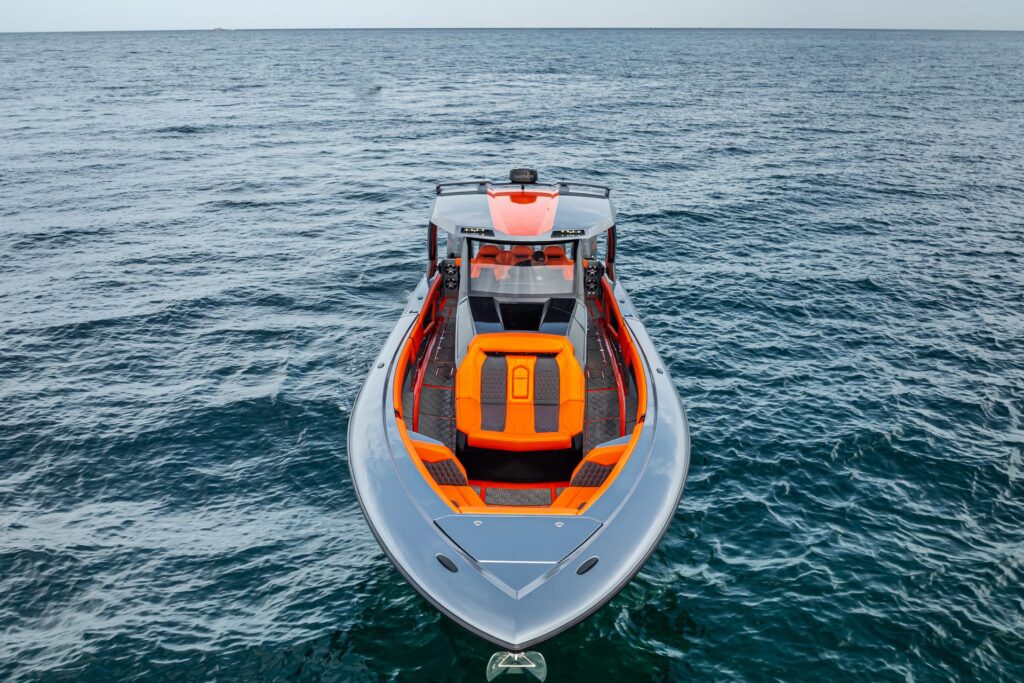
For models such as the Reaper 42 and Reaper 47, the platform establishes the recognizable foundation. The individual build then becomes an opportunity to give that platform a more specific character.
Individual Specification Makes Ownership More Personal
There is an emotional advantage to having a machine reflect decisions that were actually yours.
A standardized product can still become meaningful through use, but bespoke specification begins building that relationship earlier. The owner remembers why a color was chosen, why one material was preferred, or why a particular detail mattered. Over time, those decisions become part of the object’s identity.
That matters because serious enthusiast products are rarely experienced as interchangeable appliances. Owners develop attachments to particular cars, boats, motorcycles, watches, and aircraft for reasons that often make little sense on a spreadsheet. A certain machine represents a period of life, a set of trips, a group of friends, or simply a combination of details that feels difficult to replace.
Personal specification gives that attachment a head start. The object carries traces of the owner’s judgment from the beginning.
The effect is especially strong in boating because ownership creates repeated sensory memories. The same paint is seen under different skies. The same helm is experienced in changing water. The same cockpit hosts quiet mornings, hard-running afternoons, and evenings at the dock. Details selected during the build become part of a much larger collection of experiences.
Bespoke Does Not Mean Impractical
There is sometimes an assumption that highly customized products sacrifice usability for individuality. Poor customization certainly can. A machine built around appearance alone may become less satisfying once the initial excitement fades.
True bespoke design should do the opposite. It should allow the product to fit the owner more precisely.
If an owner spends long days aboard, comfort and storage may deserve greater attention. If the boat is used for destination runs, helm ergonomics and cockpit movement may become especially important. If visual design is a priority, the color and material strategy can be developed without ignoring maintenance and exposure.
The objective is not customization for its own sake. It is alignment.
That distinction will become increasingly important as bespoke performance boating matures. Sophisticated owners are unlikely to be satisfied by novelty alone. They will expect individual specification to improve the experience, not merely make the boat different.
The Performance Boat Is Becoming More Personal
The rise of the bespoke performance powerboat reflects a broader change in the way enthusiasts think about luxury. Prestige still matters. Performance still matters. Design still matters. But increasingly, the highest level of ownership is defined by how specifically those qualities can be brought together.
The future of the category is unlikely to be a rejection of recognizable models. Strong platforms and distinctive design identities remain essential. Instead, the opportunity lies in making those platforms more responsive to the people who own them.
A Reaper should still be recognizable as a Reaper. A successful bespoke build does not erase the identity of the machine; it sharpens the identity of that particular example.
That is why personalization is becoming more central to performance boating. Owners who have already experienced high-end machines in other categories understand that the final decisions often make the greatest emotional difference. The broad capability may come from the platform, but the sense of connection comes from the details.
Bespoke performance boating turns those details into part of the product itself. It allows a boat to be more than an expensive variation of something standardized. It allows the finished machine to become a specific expression of taste, use, and intention.
For owners ready to move from selecting a performance boat to shaping one around their own preferences, start a custom Reaper inquiry.