
Luxury has never been more available. Premium automobiles fill increasingly broad model ranges. High-end finishes, sophisticated technology, advanced materials, and once-unusual design details have migrated into products built at considerable scale. In many categories, the experience of buying something expensive has become easier, faster, and more standardized than it was a generation ago.
That development has brought obvious benefits. Quality has improved, technology has advanced, and consumers have access to remarkably capable products. Yet it has also changed the meaning of exclusivity. When thousands of people can purchase essentially the same object in essentially the same specification, price alone no longer guarantees that ownership will feel uncommon.
Limited production offers something fundamentally different. Its appeal is not simply that fewer examples leave the factory. The deeper attraction is knowing that the object remains relatively unusual in the environments where it is experienced. A limited-production performance powerboat can retain a sense of discovery, individuality, and personal connection precisely because the owner is unlikely to encounter an identical example everywhere the boat goes.
In a luxury market increasingly defined by scale, rarity has regained significance.
Luxury and Exclusivity Are No Longer Synonyms
For decades, luxury brands benefited from a relatively straightforward equation. Higher price meant better materials, more advanced engineering, superior craftsmanship, and greater scarcity. The top of the market was naturally exclusive because relatively few products were built and relatively few people had access to them.
Modern manufacturing has complicated that relationship.
Many premium products are now produced in significant quantities while maintaining extremely high standards. A luxury automobile can be beautifully constructed yet remain common in affluent neighborhoods. A premium watch can be difficult to purchase in one configuration while the brand itself produces substantial volume. High-end hotels, private clubs, aviation services, and other premium experiences increasingly operate at global scale.
None of this makes those products undesirable. It simply means luxury no longer automatically produces rarity.
That distinction matters because rarity creates a different emotional experience. When an object remains genuinely uncommon, ownership feels less like membership in a large category and more like possession of one distinctive example within a smaller world.
Familiarity Changes the Experience of Luxury
Human beings become accustomed to almost anything they see often enough.
A design that once seemed extraordinary can become visually familiar when it appears repeatedly. An unusual material can lose some of its novelty when it becomes standard across an entire segment. A prestigious badge can continue to carry meaning while becoming less surprising simply because it is seen every day.
Limited production slows that process.
An uncommon performance powerboat remains more capable of creating curiosity because observers have fewer opportunities to become accustomed to it. The silhouette may still require a second look. The model may still prompt questions at the marina. An individual specification may remain memorable because there are not dozens of nearly identical examples nearby.
This does not mean the owner should choose a boat primarily to attract attention. The more important effect is internal. Rarity helps preserve the owner’s own sense that the machine is something outside the ordinary rhythm of premium consumption.
Familiarity can make even an exceptional object feel routine. Limited production protects against that familiarity.
The Pleasure of Not Seeing Yourself Everywhere
One of the subtler frustrations in modern luxury occurs when an owner spends considerable time choosing something special only to discover that the same object appears everywhere.
The experience is familiar in the automotive world. A particular model may be technically remarkable and financially significant, yet widespread production can make it feel surprisingly ordinary in certain markets. The product remains excellent. What disappears is the sense of discovery.
Performance boating offers a different opportunity.
The marine world is already specialized, and limited-production builders can make individual platforms more uncommon still. When combined with personalized specification, the chances of encountering another boat that feels identical become smaller.
That matters because individuality is partly contextual. A machine does not exist only in isolation; it exists among other machines. The more standardized the surrounding market becomes, the more noticeable genuine difference feels.
There is a quiet satisfaction in arriving somewhere and knowing that the boat beside you is unlikely to be a duplicate of your own.
Rarity Gives Individual Specification More Weight
Customization matters in any premium product, but it becomes more meaningful when the underlying object is already uncommon.
On a heavily produced platform, unusual paint or interior choices can help separate one example from thousands of others. On a limited-production platform, those same decisions can push the individual machine considerably farther toward singularity.
This is why rarity and specification reinforce one another.
The builder provides the platform and design identity. The owner then introduces preferences through color, materials, equipment, and other configurable details. The resulting boat remains recognizably part of a model family while developing a personality that belongs to one particular build.
Adrenaline Powerboats describes its custom-building approach in precisely individual terms. The company says custom paint is used on every boat and that its design team works with customers to tailor each result. It also states that every boat is rigged in-house and that rigging is specified for the individual build.
Adrenaline does not publish a production-volume claim on the company material reviewed here, so it would be inappropriate to assign a specific number to its annual output. What its official materials do clearly support is an emphasis on unique builds rather than identical specifications repeated without variation.
Limited Production Makes Recognition More Meaningful
Recognition can be an important part of enthusiast culture.
There is a difference between recognizing a mass-market luxury product because it is frequently seen and recognizing a specialized machine because the observer genuinely knows what it is.
The latter creates a different type of connection.
An enthusiast who recognizes an uncommon boat often knows something about its design, builder, or purpose. The conversation begins from shared interest rather than simple brand awareness. A question at the fuel dock may lead to discussion about the specification, paint, engineering, or ownership experience.
That type of recognition can be more satisfying because it feels earned.
The boat does not need universal familiarity. In fact, part of the appeal may be that the people who immediately understand it are the people most interested in the category.
Limited production allows a product to retain that sense of insider recognition long after larger luxury categories have become broadly familiar.
Scarcity Can Preserve a Sense of Occasion
One of the challenges with any desirable possession is that the extraordinary eventually becomes normal.
The first drive in a new performance car feels different from the hundredth. The first time wearing an important watch is different from putting it on years later. A new boat initially turns every detail into an event before familiarity gradually takes over.
This change is natural, and it is not necessarily negative. Familiarity can create a deeper relationship with an object. But rarity can help preserve a sense that the machine still occupies a special position within the owner’s life.
A limited-production powerboat remains less likely to blend into the surrounding environment. Its design may still feel unusual. Its specification may continue to seem personal. The experience of seeing another example can remain noteworthy rather than routine.
This can give ownership a longer emotional lifespan.
The object becomes familiar to its owner without becoming visually commonplace everywhere else.
Rarity Is Different From Artificial Scarcity
Meaningful limited production should also be distinguished from scarcity created purely as a marketing device.
A numbered plaque does not automatically make something significant. Reducing availability does not create substance if the underlying object offers no compelling design, engineering, craftsmanship, or ownership experience.
Rarity works best as an amplifier.
When the machine is already desirable because of its design, capability, craftsmanship, or character, limited availability adds another reason to value the individual example. Without those qualities, scarcity can feel manufactured.
This is particularly important in performance boating because the object still has to succeed as a boat. It must operate in a demanding environment, support the owner and passengers, provide a satisfying helm experience, and continue making sense after the novelty of delivery disappears.
The strongest limited-production objects are rare because the nature of what they are encourages a more focused approach, not because somebody simply decided that a smaller number would sound more prestigious.
Marketplace Rarity Changes the Ownership Conversation
When a product is widely available, ownership conversations often revolve around comparisons.
Which trim did you choose? Which package? Which model year? Which dealer had the best allocation? Which option combination offers the strongest resale value?
Limited-production ownership tends to shift the conversation toward the individual object.
What made you choose that paint? How was the cockpit specified? Why did you choose that configuration? What attracted you to the builder? How did you discover the model?
These questions are more personal because the object itself contains more information about the owner’s choices.
That can be particularly appealing to enthusiasts who already own premium products in categories where standardization has become pervasive. Another broadly available luxury purchase may add quality to a collection without adding much novelty. An uncommon performance powerboat can introduce an entirely different kind of ownership experience.
The point is not to own something merely because others cannot. The point is to own something that has not been optimized for ubiquity.
Limited Production Encourages a Different Relationship With the Brand
Large luxury brands necessarily create distance between the customer and the people responsible for designing or manufacturing the product. This is not a criticism; it is simply a consequence of scale.
A company delivering tens of thousands of products cannot realistically build a personal relationship around every individual unit.
Smaller-volume environments can feel different.
Owners may develop greater familiarity with the builder, model lineage, design philosophy, and people involved in the product. They may follow new builds more closely because each example remains distinctive enough to be interesting. A new specification can feel like another chapter in the brand rather than another unit entering circulation.
Adrenaline’s official company material highlights this individualized approach through in-house design, custom paint, and build-specific rigging. The company describes its process as taking a design from concept through development and finished product under one broader operation.
Again, the significance is not a claimed production number. It is the fact that the brand presents individualization as a central part of how its boats are built.
That creates a very different ownership proposition from purchasing a product whose primary objective is consistent repetition at scale.
Uncommon Objects Often Feel More Personal Over Time
Rarity may create the initial attraction, but its greatest value can appear after years of ownership.
As the owner becomes familiar with the boat, the machine develops history. Certain trips become attached to it. Friends occupy familiar seats. Paint that was originally chosen from a design concept becomes the backdrop to hundreds of photographs. The helm becomes associated with particular waterways, conditions, and destinations.
At the same time, the boat remains uncommon outside that personal world.
That combination is powerful. The machine becomes deeply familiar to the owner while remaining unusual to almost everyone else.
Collectors often value exactly this tension. The object is intimate without becoming ordinary. Its controls, surfaces, and behavior may feel completely familiar after years of use, yet seeing another example can still be an event.
Mass production makes that experience harder to preserve because repetition continually reduces novelty. Limited production allows an object to remain both known and rare at the same time.
The Future of Exclusivity May Be Smaller, Not Bigger
Luxury markets will almost certainly continue to expand. Technology that is remarkable today will become expected tomorrow. Premium materials will spread into broader categories. Sophisticated manufacturing will make previously difficult features easier to reproduce.
The logical response at the highest end of the market may not be simply to add more.
It may be to make fewer.
Fewer examples allow rarity to remain authentic. Individual specification carries greater meaning. The owner is less likely to encounter duplicates. The product retains more mystery outside specialist circles, and each individual machine has more room to develop its own identity.
This is why limited production still matters even as mass-market luxury becomes increasingly sophisticated.
The value is not that a scarce object automatically makes its owner more important. The value is that scarcity can preserve something modern luxury often loses as it scales: the feeling that the object itself remains unusual.
A performance powerboat is particularly suited to that philosophy because it is already a deeply experiential machine. Add thoughtful individual specification to an uncommon platform, and ownership becomes difficult to compare with standardized luxury purchases.
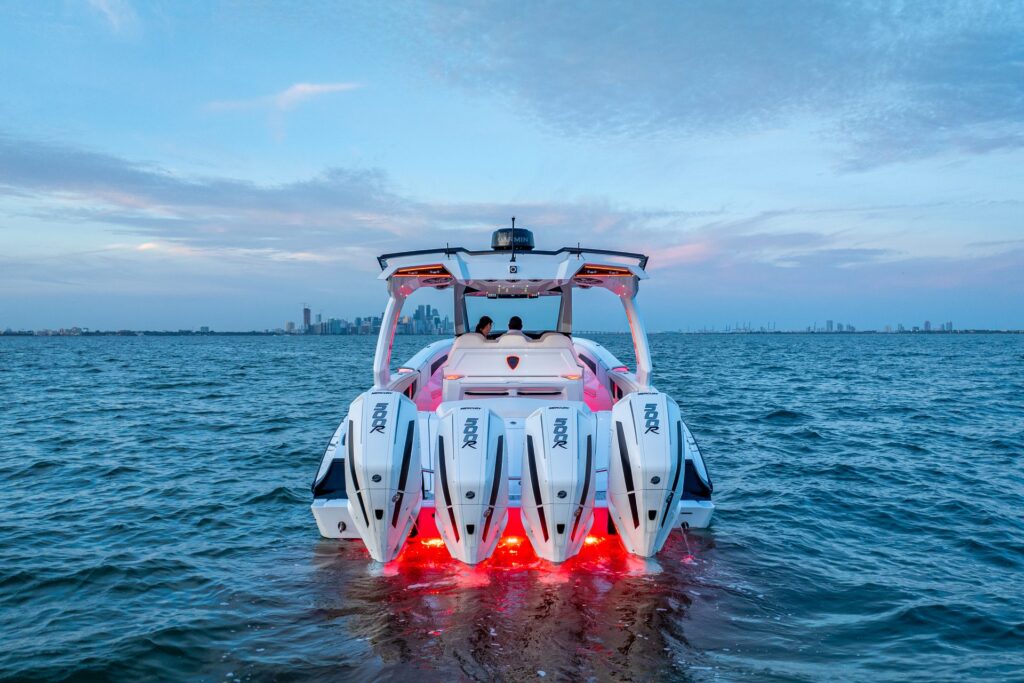
For Adrenaline, the emphasis on custom paint, individual rigging, and in-house design provides a natural framework for that kind of individuality. The current Reaper 42 and Reaper 47 remain central models within the company’s performance lineup.
Ultimately, limited production matters because exclusivity is most convincing when it can be experienced rather than merely advertised. It is the recognition that you do not see the same machine everywhere, that your individual specification carries genuine weight, and that the object still feels uncommon long after the novelty of purchase has passed.
For owners interested in creating a Reaper with an identity distinctly its own, explore a custom Reaper build.