Modern luxury has become increasingly public. What was once reserved, controlled, and experienced within smaller circles is now constantly displayed, shared, and consumed at scale. Social platforms have accelerated this shift, turning even the most exclusive purchases into widely visible moments. As a result, the traditional signals of success—cars, homes, and high-end consumer goods—have become familiar to a broader audience, and in some cases, diluted by overexposure.
In this environment, a different form of luxury has begun to carry more weight. One that is not defined by how many people see it, but by how few truly experience it. Offshore performance boating sits firmly within this category. It offers a level of privacy, control, and intentional engagement that is increasingly rare in a world built around constant visibility.
A Shift Away From Public Validation
For years, luxury has been tied closely to recognition. The value of an asset was often reinforced by how quickly it could be identified and admired by others. This created a cycle where visibility became part of the product itself. The more recognizable the brand or object, the more it reinforced status in a public setting.
Today, that dynamic is changing. For those operating at higher levels, public validation has become less meaningful. When everything is visible, visibility itself loses value. What replaces it is selectivity—experiences and assets that are not easily accessed, not widely understood, and not constantly on display.
Offshore ownership aligns naturally with this shift. It removes the owner from crowded environments and places them in a space where presence is controlled rather than imposed. The experience becomes intentional instead of performative.
Control Over Time and Environment
One of the most overlooked aspects of offshore ownership is control. Not just over the machine, but over time, location, and environment. Unlike land-based luxury, which is often constrained by infrastructure, traffic, and public interaction, offshore performance offers a different dynamic entirely.
The owner decides when to leave, where to go, and how long to stay. Routes are not dictated by roads. Speed is not dictated by congestion. The environment is dynamic, but the experience remains controlled by the operator’s decisions.
This level of autonomy introduces a different kind of luxury. It is not about convenience. It is about command. It reflects a preference for environments where decisions are made independently rather than within a shared system.
Privacy Without Isolation
Privacy in offshore performance does not mean isolation. It means selectivity.
There is still community—marinas, events, and gatherings—but participation is intentional. The people present are there by choice, not by default. This creates a different kind of interaction, one that is less transactional and more aligned around shared understanding.
A high-performance offshore boat entering a harbor is not simply another object to observe. It is a signal recognized by a smaller, more informed group. Those who understand hull design, performance capability, and build quality interpret it differently than a general audience would.
This creates a layer of communication that does not rely on explanation. It is understood within the right context.
The Role of Engineering in Perceived Value
In offshore performance, engineering is inseparable from luxury. The experience is shaped by how the boat behaves under load, how it responds to input, and how it maintains composure in imperfect conditions. These qualities are not always visible, but they are immediately felt.
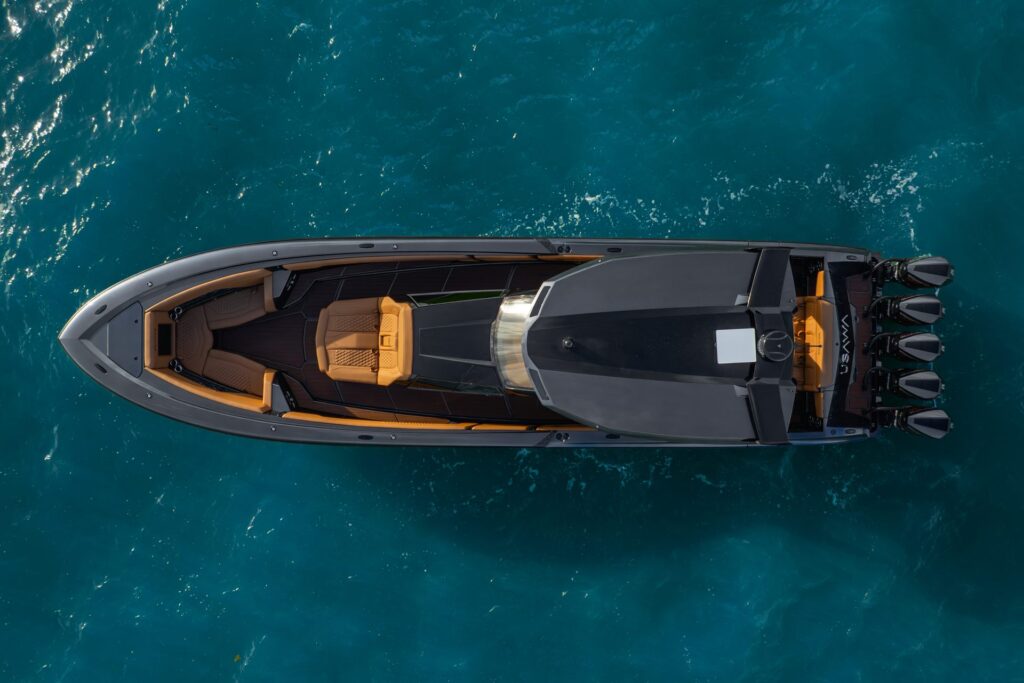
A platform like those developed by Adrenaline Powerboats reflects this approach. The emphasis is not simply on aesthetic appeal, but on delivering a machine that performs consistently across real-world scenarios. Structural integrity, balance, and predictable handling all contribute to a sense of refinement that extends beyond appearance.
This type of engineering does more than improve performance. It reinforces confidence. It allows the owner to use the boat as intended, without hesitation. That confidence becomes part of the overall experience, and ultimately part of the value.
Engagement Over Observation
Offshore ownership requires participation. It is not a passive experience. Conditions must be read, decisions must be made, and the machine must be understood. This level of engagement creates a deeper connection between owner and asset.
In contrast, many traditional luxury items can be appreciated without involvement. They are designed to be observed as much as they are used. Offshore performance reverses that relationship. The value increases with use, not just with ownership.
This distinction is important. It transforms the asset from something that is simply possessed into something that is actively experienced. Over time, that experience compounds, adding depth to the relationship.
The Quiet Authority of Presence
Presence offshore is different from presence on land. It is not amplified by crowds or constrained by proximity. It is defined by how the machine moves, how it sounds, and how it carries itself in open water.
A composed acceleration, a stable run through variable conditions, and a controlled return to dock all communicate something about the platform and the operator. These moments are not exaggerated, but they are noticed by those who understand what they represent.
For those who appreciate power, there is still a clear sense of authority. The engines are heard. The movement is felt. But it is not chaotic or attention-seeking. It is deliberate.
That distinction gives offshore presence a different kind of weight.
Scarcity Through Complexity
One of the reasons offshore ownership remains rare is that it requires more than acquisition. It requires time, knowledge, and a willingness to engage with a less predictable environment.
This complexity acts as a natural filter. Not everyone is willing to commit to it. Not everyone finds value in it. As a result, participation remains limited.
That limitation preserves scarcity.
And scarcity, when paired with meaningful experience, reinforces value in a way that mass visibility cannot.
A More Intentional Form of Luxury
As luxury continues to evolve, intention becomes a defining characteristic. The most meaningful assets are not chosen for their ability to impress quickly, but for their ability to deliver consistently over time.
Offshore performance embodies this shift. It is not about instant recognition. It is about long-term engagement. It is about choosing a platform that performs as expected, in conditions that are not always predictable, and doing so with confidence.
This level of intention changes how ownership is perceived. It moves away from display and toward experience.
Final Thought
In a world where visibility is constant and attention is fragmented, the appeal of private, controlled experiences continues to grow. Offshore performance offers exactly that—an environment where luxury is defined not by how many people are watching, but by how fully the experience is understood.
A high-performance powerboat is not just a way to move across water. It is a way to step outside of crowded systems, to operate with autonomy, and to engage with something that demands more—and gives more in return.
For those who value that exchange, offshore ownership represents a form of luxury that is not only distinct, but increasingly relevant.
Begin your private build consultation: https://lp.adrenalinepowerboats.com/reaper-quote
Explore Adrenaline Powerboats: https://adrenalinepowerboats.com/home/